What is Reiki?
Reiki (pronounced ray-key) is a gentle, hands-on complementary therapy that originated in Japan in the early 1900s.
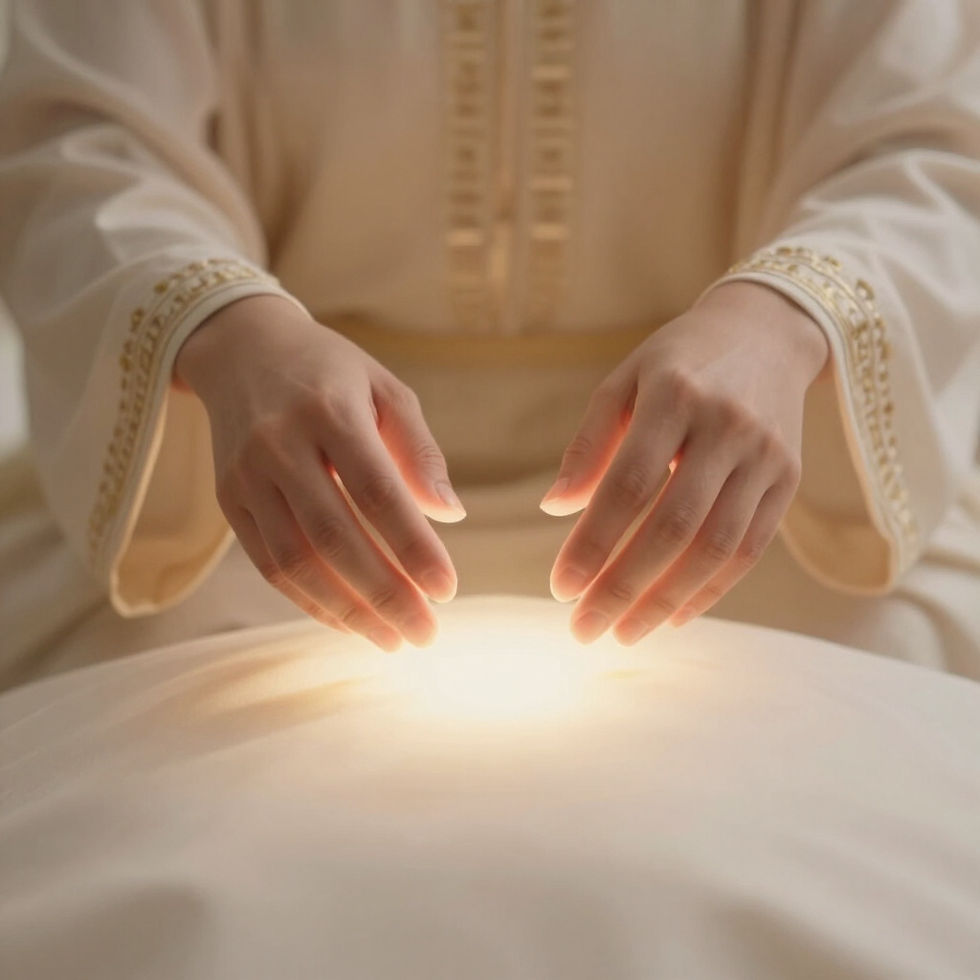
During a session, I place my hands lightly on or just above different areas of your body while you rest fully clothed in a calm, quiet environment.
People seek Reiki for many different reasons. Some are feeling stressed or overwhelmed. Others are navigating grief, burnout, physical illness or significant life changes. Many simply have a sense that something feels "stuck" and are looking for a different way of reconnecting with themselves.
Although Reiki has spiritual origins, you don't need to hold any particular beliefs to experience it.
My role isn't to convince you what Reiki is or how it works—it's simply to provide a safe, supportive space and allow you to have your own experience.
What Does the Research Say?
Over the past two decades, Reiki has been studied in hospitals, universities and healthcare settings around the world. While researchers have not yet established how Reiki may work, a growing number of studies suggest it may help reduce stress and anxiety, encourage deep relaxation, improve sleep and support an overall sense of wellbeing when used alongside conventional medical care.
One proposed explanation is that Reiki helps activate the body's relaxation response by calming the nervous system.
Other researchers have explored whether the body's natural electromagnetic fields may play a role. At this stage, however, no single scientific explanation has been confirmed, and more high-quality research is still needed.
Some of the published research includes:
-
Thrane, S. & Cohen, S. Effect of Reiki Therapy on Pain and Anxiety in Adults: An In-Depth Literature Review. Pain Management Nursing.
-
Vitale, A. An Integrative Review of Reiki Touch Therapy Research. Holistic Nursing Practice.
-
Baldwin, A. L. et al. Reiki Improves Heart Rate Homeostasis in Laboratory Rats. Journal of Alternative and Complementary Medicine.
-
Studies published in the Journal of Bodywork and Movement Therapies exploring Reiki's effects on relaxation and wellbeing.
What Some Practitioners Believe
Reiki practitioners believe that our physical, emotional and mental wellbeing are closely connected, and that prolonged stress, trauma or unresolved emotions can sometimes leave us feeling energetically "stuck" or out of balance. From this perspective, Reiki is thought to help restore the natural flow of energy throughout the body.
Like many complementary therapies, these ideas are not universally accepted within science. I share them because they help explain how many Reiki practitioners understand the process and why clients sometimes report experiences that are difficult to explain through current scientific understanding alone.
As that energy begins to move, people may experience a wide range of sensations during a session, including warmth, tingling, emotional release, muscle twitching or a deep sense of calm. Burping or stomach rumbling are common and it is believed that they are signs of "stuck" energy moving. Others simply rest quietly and notice very little during the session itself.
What I've noticed
Every Reiki session is different.
Some clients fall asleep almost immediately.
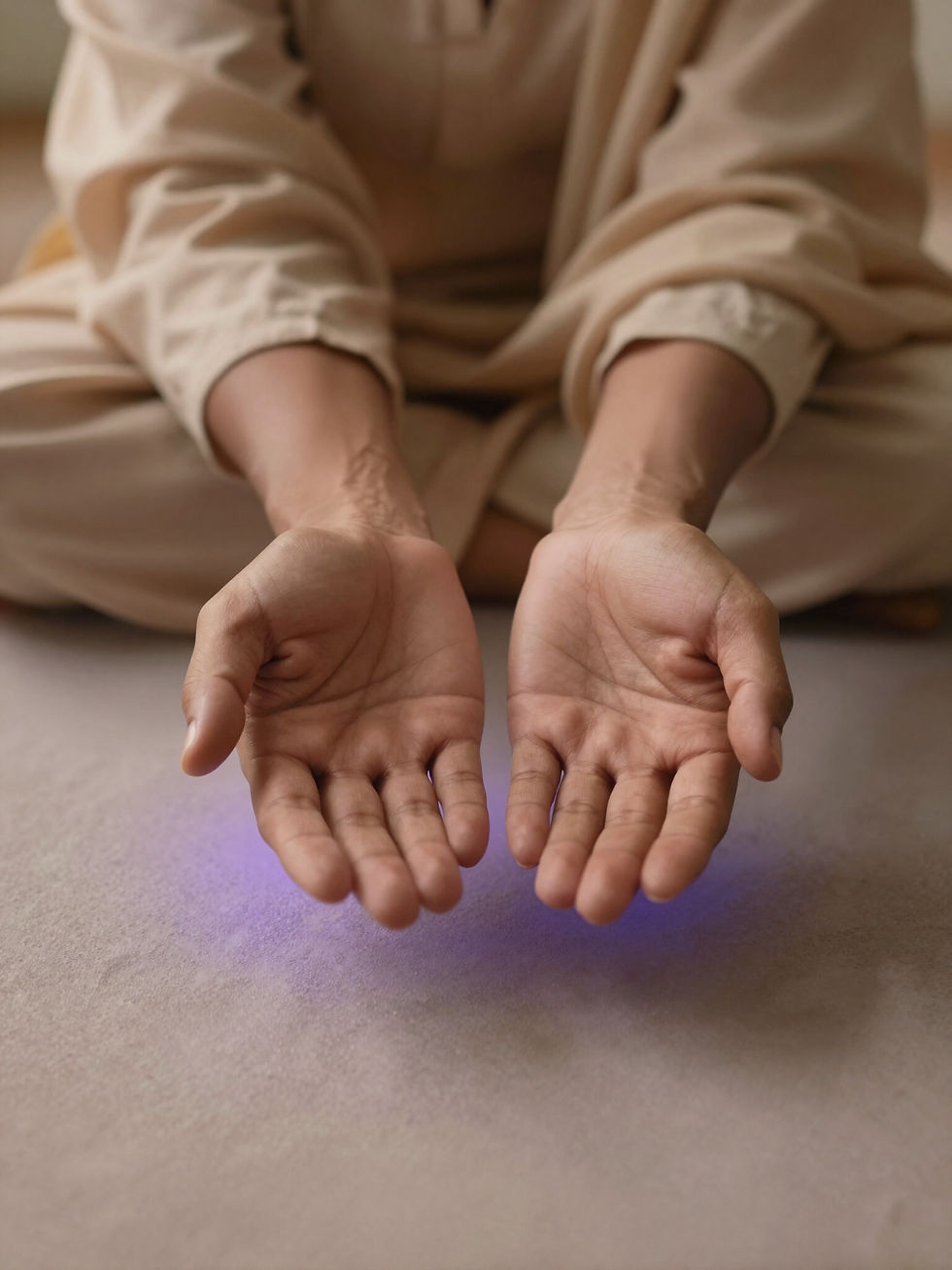
Some describe feeling warmth or tingling beneath my hands.
Some notice emotions surfacing that they hadn't expected. Some cry, some snore. I've had people whose body reacts like the energy is being pulled out of them. Some feel a heavy weight on various parts of their body which then subsides as I put my hands on that spot.
Afterwards, clients often describe feeling lighter, calmer or clearer than when they arrived.
I can't predict what someone will experience because no two people arrive with the same story. My role isn't to make something happen or interpret every sensation. It's to remain present, provide a safe environment and allow the session to unfold naturally.
Whether you experience profound stillness or simply enjoy an hour without the demands of everyday life, every experience is valid.
One thing I can guarantee: you will feel relaxed and calm at the end of the session.
YOUR JOURNEY
Your Experience
You don't need to understand Reiki before trying it.
You don't need to believe in energy.
You don't need to be spiritual.
Some people come because they're curious. Others come because they've reached a point where they're willing to try something different. Many simply want an hour where they can step away from the noise of everyday life and reconnect with themselves.
Ultimately, what matters isn't whether your experience matches someone else's.
What matters is your own experience.
If you're curious about Reiki or would like to talk about whether it's right for you, I'd be happy to answer any questions before you book.