What is Art Therapy?
When there are simply no words...
Why is art different from talking?
Conversation begins with what we already know. Art Therapy often begins with what we don't.
Sometimes the things that are holding us back sit outside our conscious awareness. Through drawing, painting and mark-making, hidden thoughts and feelings can begin to emerge naturally. Once they become visible, they can finally be explored.
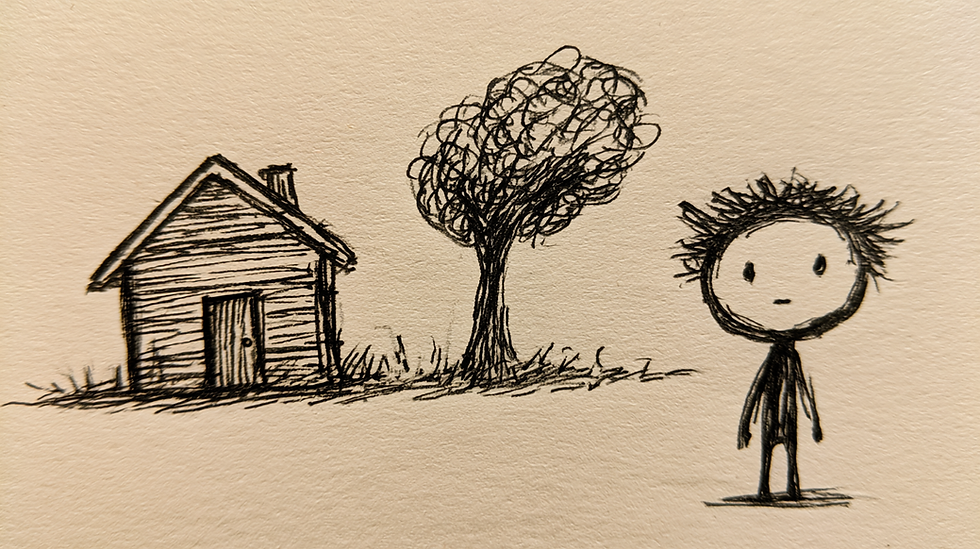
In simple words...
...we find the "aha" moments together so that you can take the next step.
The Methodology
Art Therapy sidesteps words: When you paint or draw, your hands move without needing to find the perfect words. This turns down your critical inner voice.
Art Therapy unlocks deep feelings: Your art can reveal hidden fears, memories, or wishes that you might not even be aware of.
Art Therapy calms your body: Making art shifts your brain waves into calm states (like alpha waves) and soothes your brain's alarm system (the amygdala).
Art Therapy translates the message: Your therapist helps you look at your art later to decode these visual symbols back into conscious awareness.
The Science
Art therapy is uniquely effective for processing trauma and difficult memories because trauma is fundamentally stored in the brain as visual images, bodily sensations, and emotions: not as words.
When a person experiences something overwhelming, the language center of the brain (Broca's area) can physically shut down. This makes traditional talk therapy incredibly difficult, as there are literally "no words" for what happened. Art therapy bridges this gap through specific neurobiological steps.
1. Accessing Non-Verbal Memories
-
The Brain's Filing System: Traumatic memories are often stored as fragmented, raw sensory data in the amygdala and limbic system.
-
The Art Shortcut: Picking up a brush or molding clay connects directly to these deep sensory areas. It allows a survivor to externalize a memory using shapes, colors, or textures without needing to speak.
2. Lowering the Brain's Alarm System
-
Calming the Amygdala: Thinking about a difficult memory usually triggers the amygdala, sending the body into a fight-or-flight panic.
-
Sensory Grounding: The physical, rhythmic act of making art-like the repetition of sketching or kneading clay; acts as a sensory grounding mechanism. This reduces amygdala activity, lowering anxiety and allowing the brain to look at the memory without reliving the panic.
3. Externalization and "Distance"
-
Getting It Out: When a painful memory stays trapped inside your head, it feels like it is you.
-
The Canvas as a Buffer: Placing that memory onto a canvas or sculpture physically externalizes it. The survivor can look at the artwork and say, "The pain is over there on the paper, it is no longer inside of me." This psychological distance makes the memory manageable and safe to explore.
4. Rewiring and Meaning-Making
-
Memory Reconsolidation: Every time you recall a memory, your brain subtly rewrites it. By bringing up a difficult memory in a safe, creative, and calm environment, you change the way it is stored.
-
Rebuilding the Narrative: Once the visual imagery is on paper, the art therapist helps the person slowly translate those images into verbal language. This integrates the "silent" traumatic memory back into the prefrontal cortex (the logical brain), transforming a chaotic flashback into a coherent past event that is finally over.